
Lesson 4: Deductive vs. Inductive
Simple ways to teach language rules.
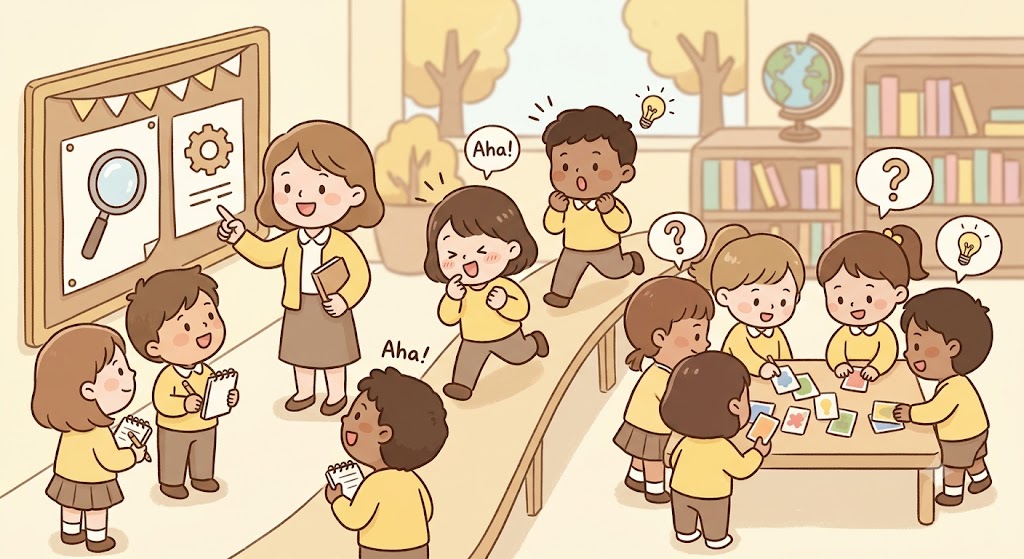
Concept Explanation
Teachers have two main ways to show students how a language works:
1. Deductive: Rule First
You tell students the rule clearly. Then, they practice using it. It is direct and fast.
2. Inductive: Example First
You show students examples first. They look at the examples to guess how the rule works. It is more hands-on.
The "Middle Path": Discovery
You can also help students find the answer themselves:
- Modified Deductive: You give clues to help them find the rule, then you tell them the rule before they practice.
- Modified Inductive: You let them practice first, then help them explain the rule after they have tried it.
Video Lesson
Practical Examples
Deductive Example (Past Tense):
You write on the board: "Add -ed to make past tense." Then, you give them a worksheet to practice adding -ed to verbs.
Inductive Example (Past Tense):
You give the students a short story full of verbs ending in -ed. You ask them, "What do you notice about all these verbs?" and let them discover the rule.
Guided Discovery Example (Can vs. Could):
You give them sentences like "Can you open the door?" vs "Could you open the door?" and ask, "Which one sounds more polite?" letting them find the difference.
💡 Teacher Tip
Try switching between these approaches during your lesson! If a student is stuck, you can provide the rule (Deductive) or offer more examples to guide them (Inductive).
The Teaching Journey
Deductive Approach
Rule first. Practice after.
Modified Deductive
Help with clues, then give the rule.
Modified Inductive
Practice first, then name the rule.
Inductive Approach
Implicit learning. Just examples.
Teacher's Dilemma
Time is short, but the rule is complex. What do you do?
Quiz
Loading...
"Teaching is the greatest act of optimism."
— Colleen Wilcox
Ivy Education Group ၏ အခမဲ့ Lesson များ ဖြစ်ပါသည်။
Ivy English School | Ivy Young Learner School | IELTS Ivy | Ivy Teacher Training Institute
ဆက်သွယ်ရန် ဖုန်းနံပါတ်များ:
09 751 444 167 | 09 751 444 267 | 09 751 763 490